
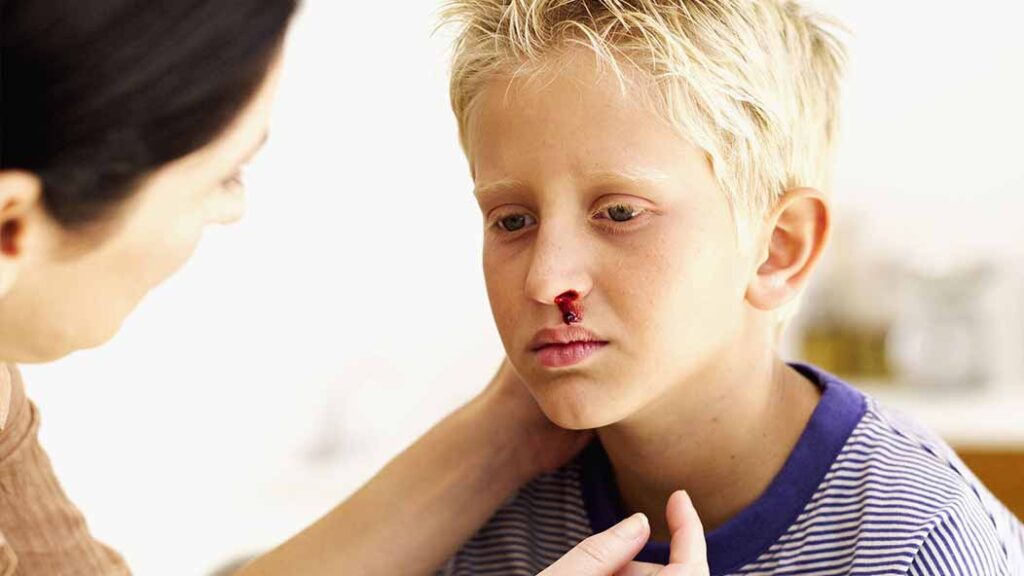
Nosebleeds can be sudden and scary—especially when it’s your child and there’s a lot of blood. But in most cases, a childhood nosebleed is harmless and easy to manage at home. Understanding what causes nosebleeds …
Managing a Nosebleed in Children
July 3, 2025
Nosebleeds can be sudden and scary—especially when it’s your child and there’s a lot of blood. But in most cases, a childhood nosebleed is harmless and easy to manage at home. Understanding what causes nosebleeds and how to stop them quickly can help you keep calm and care for your child confidently.
Here’s how to handle a nosebleed safely, prevent future ones, and know when to call for medical help.
What Causes Nosebleeds in Kids?
The most common causes include:
- Dry indoor air or heated rooms
- Nose picking or rubbing
- Allergies or colds
- Minor injuries from bumps or falls
- Frequent sneezing or blowing the nose too hard
- Use of nasal sprays
- Structural issues inside the nose (less common)
Children’s noses have sensitive blood vessels close to the surface, which makes them more prone to bleeding—even from minor irritation.
How to Stop a Nosebleed: Step-by-Step
1. Stay Calm and Reassure Your Child
Let them know it’s okay and they’re not in danger. Your calm voice will help them stay still and reduce anxiety.
2. Sit Them Upright
Have your child sit upright and slightly lean forward. This prevents blood from draining down the throat, which can cause coughing or vomiting.
3. Pinch the Nose
Using your thumb and forefinger, gently pinch the soft part of the nose (just below the bony bridge). Hold it firmly for 10 full minutes without checking.
Set a timer—many parents stop too early thinking the bleeding has stopped.
4. Apply a Cold Compress (Optional)
Placing a cold compress or ice pack on the bridge of the nose can help constrict blood vessels and slow the bleeding.
What Not to Do
- ❌ Don’t tilt the head back – This can cause blood to flow into the throat or stomach.
- ❌ Don’t stuff tissues up the nose – This may irritate the nasal lining further.
- ❌ Don’t panic – Children take cues from your reaction.
After the Bleeding Stops
- Encourage your child to rest quietly for 15–30 minutes.
- Ask them to avoid blowing their nose, picking, or rough play for the rest of the day.
- Apply a thin layer of petroleum jelly inside the nostrils if dryness is an issue.
- Use a humidifier in the bedroom during dry weather or heating season.
When to Seek Medical Attention
Take your child to urgent care or call your provider if:
- The nosebleed lasts longer than 20 minutes
- Bleeding is heavy and won’t stop
- It happens frequently without obvious cause
- Your child shows signs of dizziness, weakness, or fainting
- The bleeding follows a head injury
- You see blood coming from both nostrils at once
Also ask your pediatrician if your child is on any medications or has a family history of bleeding disorders.
If symptoms get worse or don’t improve, visit your local urgent care provider for professional evaluation.
Hey Did You Know We Have an IV Therapy Spa Inside? Check out our drip menu!



















