When gas is trapped in your digestive system, it can lead to bloating, cramping, and stomach pressure. One effective way to relieve this discomfort is by applying gentle pressure to certain areas of the abdomen. …
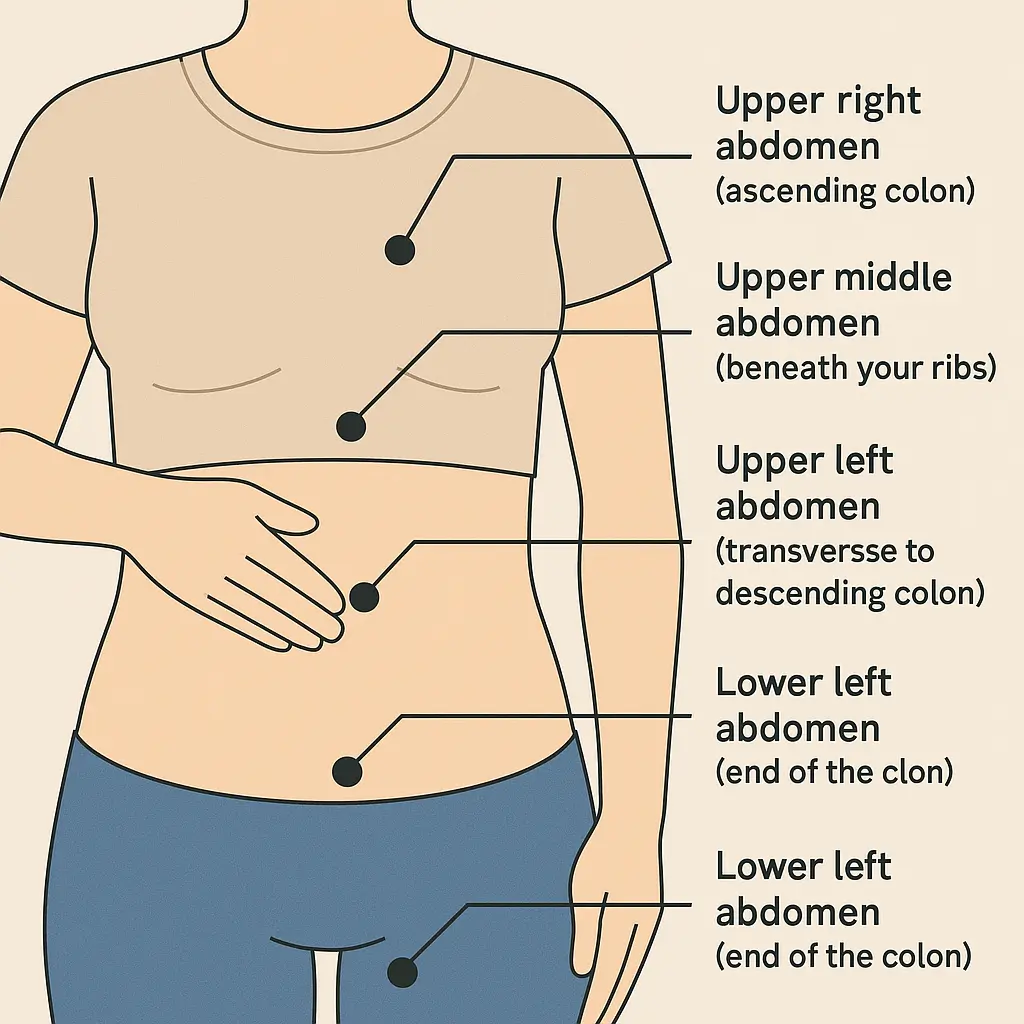
Where to press to release gas?
July 7, 2025
When gas is trapped in your digestive system, it can lead to bloating, cramping, and stomach pressure. One effective way to relieve this discomfort is by applying gentle pressure to certain areas of the abdomen. Knowing exactly where to press—and how to do it safely—can help release gas and restore comfort naturally.
This simple form of abdominal massage or acupressure can be done at home and often brings relief within minutes.
Where to press on your stomach to relieve gas
- Lower right abdomen (start of the colon)
Begin by gently pressing on the lower right side of your abdomen, just above your hip bone. This is where your large intestine begins. Light, circular pressure here helps stimulate the colon and move gas upward. - Upper right abdomen (ascending colon)
Move your hands upward along the right side of your abdomen, following the line of your colon. Press and massage gently as you go—this encourages gas to move toward the transverse colon. - Upper middle abdomen (beneath your ribs)
Place your fingers just below the ribcage in the center. This area may feel tender during bloating. Apply light circular pressure or gently knead this region to help gas shift through the upper digestive tract. - Upper left abdomen (transverse to descending colon)
Continue across to the upper left side of your belly. Press and massage this area to keep gas moving along the path of the colon. - Lower left abdomen (end of the colon)
Finally, press down gently on the lower left quadrant—just above the hip. This is where gas often collects before passing. Gentle, rhythmic pressure here can encourage a release.
How to perform a full gas-relief massage
- Lie flat on your back or recline slightly with your knees bent.
- Follow a clockwise motion, which traces the natural path of your colon: lower right → upper right → upper left → lower left.
- Use your fingertips or palm to apply light to moderate circular pressure, pausing in each quadrant for 10–15 seconds.
- Repeat the full cycle 2–3 times, breathing deeply and slowly as you massage.
This method combines physical pressure with motion, encouraging your intestines to push trapped air through naturally.
Additional gas-relieving pressure points (acupressure)
- CV6 (Sea of Energy point)
Located about 1.5 inches below your belly button. Apply steady, gentle inward pressure for 1–2 minutes while breathing slowly. This is thought to support digestion and relieve gas buildup. - ST36 (Stomach 36 point)
Found about four finger-widths below your kneecap and slightly to the outside of your shin bone. Apply firm circular pressure with your thumb for 30 seconds to help with bloating and digestion.
Tips for best results
- Warm your hands before beginning to avoid shock to your skin.
- Use a heating pad after massaging to relax muscles and enhance relief.
- Drink warm water or peppermint tea after applying pressure to support gas movement.
- Walk gently or try a knees-to-chest stretch after the massage to help gas pass.
When to visit urgent care for gas pain
While pressure and massage can relieve mild gas, you should seek care if:
- Gas pain is severe or doesn’t improve in 24 hours
- You haven’t had a bowel movement in several days
- Bloating comes with vomiting or fever
- You feel faint, dizzy, or can’t eat
- You notice blood in your stool
Urgent care providers can examine your abdomen, order imaging if necessary, and offer medication or referrals to help you feel better quickly.
Final thought
Knowing where and how to press on your abdomen can bring fast relief from uncomfortable gas and bloating. With simple techniques, you can activate your digestive system and help your body move trapped air naturally. If home efforts don’t help—or if your pain worsens—don’t wait to get checked out.
If symptoms get worse or don’t improve, visit your local urgent care provider for professional evaluation.
Hey Did You Know We Have an IV Therapy Spa Inside? Check out our drip menu!
abdominal discomfortabdominal massageacupressure for gasbelly massagebloating remediescolon massageCV6 energy pointdigestive tipsgas paingas release techniquesgut healthhome gas reliefnatural remediesST36 pointstomach pressure pointsstomach self-caretrapped gasurgent carewhere to press for gas relief