
Gonorrhea is one of the most common and easily treatable sexually transmitted infections (STIs), but it can also cause serious complications if left untreated. Caused by the bacterium Neisseria gonorrhoeae, gonorrhea can affect the genital …
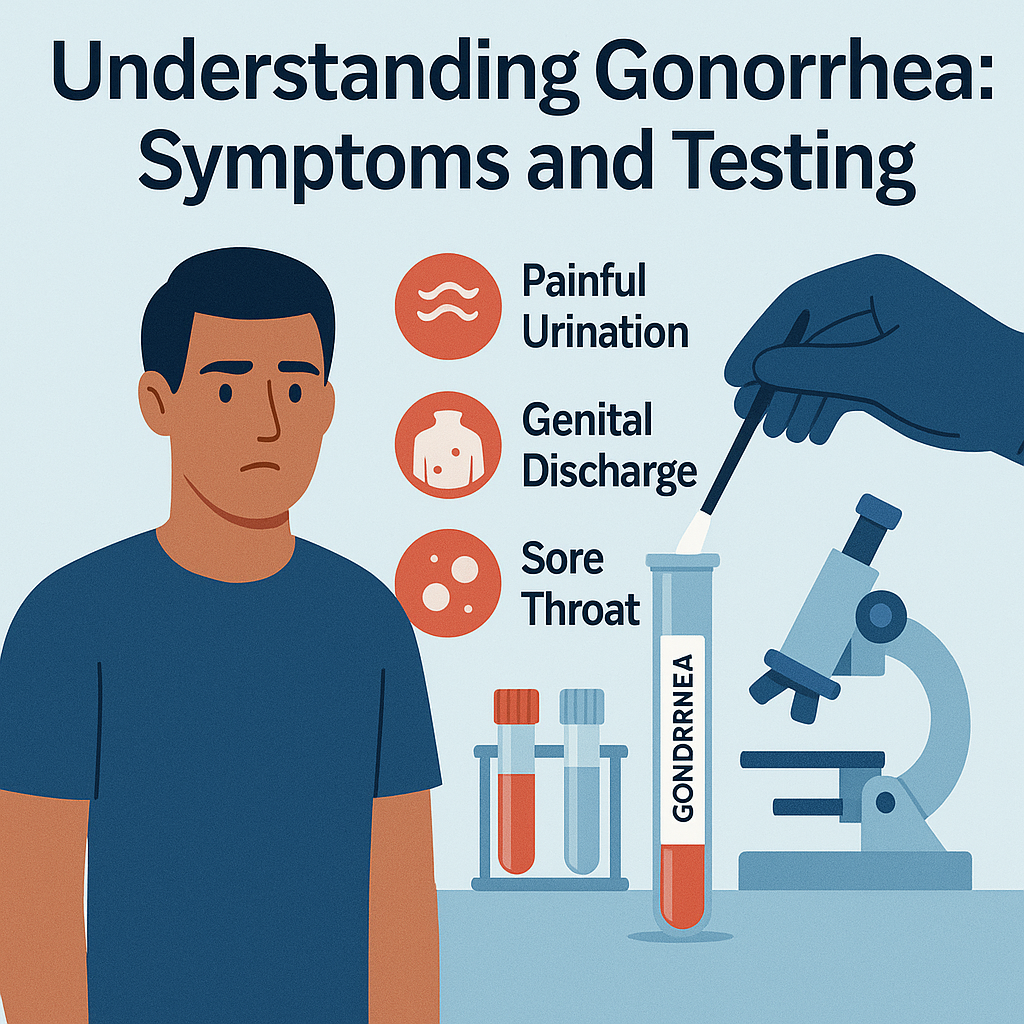
Understanding Gonorrhea: Symptoms and Testing
June 5, 2025
Gonorrhea is one of the most common and easily treatable sexually transmitted infections (STIs), but it can also cause serious complications if left untreated. Caused by the bacterium Neisseria gonorrhoeae, gonorrhea can affect the genital tract, rectum, and throat. Because many people with gonorrhea may not have noticeable symptoms, it’s often referred to as a “silent” infection, making regular testing essential for sexually active individuals.
In this article, we’ll dive into the symptoms, risks, and testing for gonorrhea so you can take the necessary steps to protect yourself and your partners.
What Are the Symptoms of Gonorrhea?
Many individuals with gonorrhea do not experience symptoms or may have mild symptoms that they don’t recognize as an infection. This is why it’s crucial to get tested regularly, especially if you have multiple sexual partners or have unprotected sex.
However, when symptoms do appear, they can vary depending on the area of the body that is infected. Below are the common signs of gonorrhea for both men and women:
In Women:
- Abnormal vaginal discharge: The discharge may be yellow, green, or have a strong odor.
- Painful urination: A burning sensation when urinating.
- Pelvic pain: Pain in the lower abdomen or pelvic region.
- Painful intercourse: Discomfort during sexual activity.
- Bleeding between periods: Spotting or bleeding after sex or in between periods.
- Rectal symptoms: If the infection is spread through anal sex, women might experience rectal pain, discharge, or bleeding.
In Men:
- Discharge from the penis: The discharge may be thick, yellow, or green.
- Painful urination: A burning or painful sensation when urinating.
- Swollen or painful testicles: Men may experience pain or swelling in the testicles, which can indicate complications like epididymitis.
- Rectal symptoms: Similar to women, men who engage in anal sex may experience rectal pain, discharge, or bleeding.
In Both Genders:
- Sore throat: If gonorrhea is contracted through oral sex, it can infect the throat, leading to a sore throat or discomfort while swallowing.
- Eye infection: In rare cases, gonorrhea can infect the eyes, leading to conjunctivitis (pink eye) that may be painful and have pus or discharge.
- Joint pain: If the infection spreads to the joints, it can cause gonococcal arthritis, which is characterized by pain and swelling in the joints.
How Is Gonorrhea Spread?
Gonorrhea is highly contagious and is primarily spread through sexual contact. Here are the main ways gonorrhea can be transmitted:
- Vaginal sex: The infection can spread through vaginal fluids during unprotected sex.
- Anal sex: Gonorrhea can be transmitted through unprotected anal sex.
- Oral sex: Oral sex with an infected partner can spread gonorrhea to the throat.
- From mother to baby: A pregnant woman with gonorrhea can pass the infection to her baby during childbirth, which may lead to serious complications such as blindness or joint infections.
What Are the Risks of Untreated Gonorrhea?
If left untreated, gonorrhea can lead to serious health problems, some of which can have long-term consequences. Here are the potential risks of untreated gonorrhea:
1. Pelvic Inflammatory Disease (PID)
For women, untreated gonorrhea can spread to the uterus, fallopian tubes, and ovaries, causing pelvic inflammatory disease (PID). PID can lead to chronic pelvic pain, infertility, and an increased risk of ectopic pregnancy, where the pregnancy grows outside the uterus. PID is one of the leading causes of infertility in women.
2. Epididymitis
In men, untreated gonorrhea can lead to epididymitis, an infection of the tube at the back of the testicles. Epididymitis can cause pain, swelling, and, in some cases, can lead to infertility if the infection spreads to the testicles.
3. Gonococcal Arthritis
Gonorrhea can spread to the bloodstream, causing gonococcal arthritis, which results in painful, swollen joints. It can also cause skin rashes and can be life-threatening if not treated.
4. Increased Risk of HIV
Having gonorrhea increases the risk of contracting or transmitting HIV. The presence of gonorrhea can cause sores or inflammation in the genital area, making it easier for the HIV virus to enter the body during sexual activity.
5. Complications in Newborns
If a woman with gonorrhea gives birth, the baby can contract the infection during delivery. This can lead to eye infections (conjunctivitis) or pneumonia in newborns. Immediate treatment is crucial to prevent complications.
How Is Gonorrhea Diagnosed?
Diagnosing gonorrhea involves a simple and straightforward process, including a urine test or swab test. Your healthcare provider may take a swab from the infected area (such as the cervix, urethra, throat, or rectum) or ask you to provide a urine sample. Here’s how the testing process works:
- Urine test: A urine sample is tested for the presence of Neisseria gonorrhoeae.
- Swab test: For women, a swab of the cervix may be taken, and for men, a swab of the urethra may be collected. In cases of rectal or throat infections, swabs will be taken from those areas.
- Culture or PCR test: In some cases, a culture or polymerase chain reaction (PCR) test may be used to identify the bacteria. This test is more accurate and can identify the exact strain of gonorrhea.
How Is Gonorrhea Treated?
Gonorrhea is highly treatable with antibiotics, but it’s essential to complete the full course of medication to fully clear the infection. The CDC currently recommends the following treatment:
- Ceftriaxone: This is usually given as a single shot, often administered in a healthcare setting.
- Azithromycin or Doxycycline: These antibiotics may be prescribed in combination with ceftriaxone, depending on the strain and local antibiotic resistance patterns.
It’s important to not engage in sexual activity until you and your partner(s) have completed treatment and received confirmation that the infection is cleared.
Re-infection
Even after successful treatment, you can get reinfected with gonorrhea if you have unprotected sex with an infected partner. That’s why it’s crucial that both you and your sexual partner(s) get tested and treated. If you test positive for gonorrhea, it’s essential to let any recent partners know so they can get tested and treated as well.
How to Prevent Gonorrhea
The most effective way to prevent gonorrhea is to practice safe sex:
- Use condoms: Condoms are highly effective at reducing the risk of gonorrhea and other STDs.
- Limit sexual partners: Reducing the number of sexual partners can decrease your exposure to gonorrhea.
- Get tested regularly: If you’re sexually active, especially with new or multiple partners, regular testing is essential to detect infections early and prevent complications.
- Talk to your partner(s): Have open and honest conversations about sexual health and encourage your partner(s) to get tested.
Need Gonorrhea Testing or Treatment in Miami Beach?
At Miami Beach Urgent Care, we provide confidential and discreet STD testing and treatment for gonorrhea and other STIs. Our experienced medical professionals are here to help you with fast and effective testing, treatment, and follow-up care.
Call us today at +1 305-344-2273 or walk in for a confidential consultation and treatment. Don’t wait—protect your health and get tested today!
beach medical helpbeachside medical clinicdehydration treatment Miamiemergency clinic Miami BeachER alternative Miamifast care South Floridafood poisoning clinicheat exhaustion Miami Beachjet lag recovery IVkid-friendly urgent careMiami Beach health tipsMiami Beach local doctorMiami nightlife recoveryquick STD testing Miamiquick X-rays MiamiSouth Beach flu seasonsports injury Miami Beachsunburn treatment Miamiurgent care for travelerswound care clinic



















