Accidents can happen in the blink of an eye—whether it’s a cut in the kitchen, a twisted ankle during yard work, or a sudden fever in the middle of the night. Being prepared with a …
First Aid 101: What to Keep at Home
June 6, 2025
Accidents can happen in the blink of an eye—whether it’s a cut in the kitchen, a twisted ankle during yard work, or a sudden fever in the middle of the night. Being prepared with a well-stocked first aid kit at home can make all the difference in how effectively and quickly you respond to unexpected injuries or illnesses. While a first aid kit can’t replace professional medical care when it’s needed, it can help you handle minor issues or provide crucial support while you wait for help to arrive.
Here’s a guide to what you should keep in your home first aid kit and why it’s so important to be prepared.
Why You Need a First Aid Kit at Home
Having a first aid kit means you’re ready to treat minor injuries right away. It can prevent complications, reduce pain, and give you peace of mind. For households with children, seniors, or people with chronic conditions, a customized kit can be an even more important safety tool. Even if you rarely use it, just knowing it’s there can ease stress in emergency situations.
Essential First Aid Supplies
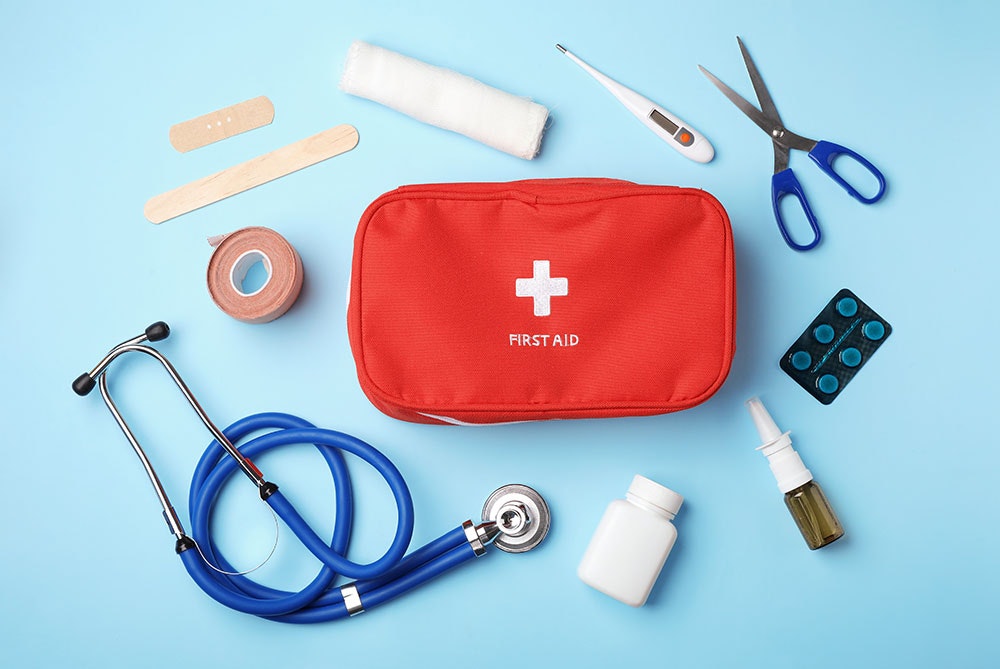
A good home first aid kit should include the basics to treat common injuries. You can purchase a ready-made kit and add items as needed, or assemble one yourself using the list below:
1. Bandages and Dressings
- Adhesive bandages (various sizes) for small cuts and scrapes
- Sterile gauze pads and adhesive tape
- Elastic bandages for sprains or strains
- Butterfly closures or wound strips for deeper cuts
2. Antiseptics and Ointments
- Antiseptic wipes or hydrogen peroxide for cleaning wounds
- Antibiotic ointment (like Neosporin) to prevent infection
- Alcohol wipes for sterilizing skin or tools
3. Medications
- Pain relievers like acetaminophen or ibuprofen
- Antihistamines for allergic reactions
- Anti-diarrheal medication and antacids
- Hydrocortisone cream for rashes or insect bites
- Cold and flu medication
4. Tools and Equipment
- Digital thermometer
- Tweezers (for splinters or ticks)
- Scissors (for cutting bandages or clothing)
- Safety pins and medical gloves
- Flashlight with extra batteries
- CPR face shield (for protection during resuscitation)
5. Specialized Items
- Instant cold packs
- Eye wash solution or sterile saline
- Burn cream or gel
- Finger splints or a small brace
- Emergency contact numbers and a first aid manual
Personalize Your Kit
Everyone’s health needs are different. You may need to include personal medications, asthma inhalers, or items specific to chronic conditions like diabetes. If you have children, include child-appropriate medications and tools. Store your kit in a waterproof, clearly labeled container and keep it in a central location that’s easy to access—but out of reach of young children.
Tips for First Aid Readiness
- Check regularly to replace expired medications and restock used supplies.
- Review instructions for using each item. In an emergency, you don’t want to waste time figuring it out.
- Take a first aid course to boost your confidence and skills—you never know when they might save a life.
Be Prepared, Stay Safe
Emergencies are unpredictable, but your response doesn’t have to be. A well-prepared first aid kit is a simple yet powerful way to protect yourself and your loved ones at home. With the right supplies on hand, you can respond quickly and calmly when the unexpected occurs.
Need help building your home safety plan or understanding what’s best for your family’s health needs?
Call 305-344-CARE (2273) to speak with someone who can guide you on first aid essentials, personalized health support, and more.
beach medical helpbeachside medical clinicdehydration treatment Miamiemergency clinic Miami BeachER alternative Miamifast care South Floridafood poisoning clinicheat exhaustion Miami Beachjet lag recovery IVkid-friendly urgent careMiami Beach health tipsMiami Beach local doctorMiami nightlife recoveryquick STD testing Miamiquick X-rays MiamiSouth Beach flu seasonsports injury Miami Beachsunburn treatment Miamiurgent care for travelerswound care clinic