It only takes a moment—your toddler brushes a wooden bench, walks barefoot across the deck, or grabs a stick—and suddenly there’s a tiny splinter buried in their skin. While splinters are usually minor, removing them …
Splinter Trouble? How to Safely Remove One from a Squirmy Toddler
July 3, 2025
It only takes a moment—your toddler brushes a wooden bench, walks barefoot across the deck, or grabs a stick—and suddenly there’s a tiny splinter buried in their skin. While splinters are usually minor, removing them from a toddler who doesn’t want to sit still can quickly turn into a challenge.
With the right approach, however, you can safely take care of a splinter at home and keep the process as stress-free as possible.
Step 1: Set the Scene Before You Start
Before reaching for tweezers, prepare your toddler and your tools. Toddlers often react more to the fear of what’s coming than to the actual discomfort.
Here’s how to start:
- Choose a quiet, well-lit space where you can both sit comfortably
- Talk calmly and explain what you’re going to do in toddler-friendly language
- Avoid scary terms like “poke,” “stab,” or “cut”—try saying you’re just going to “get the little piece out”
Have clean tweezers, antiseptic wipes, and a bandage nearby. If possible, enlist another adult to help keep your child gently still.
Step 2: Wash the Area Gently
Before touching the splinter, clean the area around it with warm water and mild soap. This reduces the risk of infection and helps you see what you’re working with.
- Pat dry with a soft towel
- Do not scrub or apply strong disinfectants that might sting
- Position your child so the splintered area is easy to reach without twisting or pulling
If the splinter is in the foot or palm, you may need to sit your child in your lap with the affected hand or foot resting on a pillow.
Step 3: Assess the Splinter’s Depth
Before removing the splinter, take a moment to examine its size and position.
- If the splinter is sticking out of the skin, it may be removable with tweezers alone
- If it’s fully under the skin, you may need to gently open the surface with a sterile needle
Do not attempt removal if the splinter is deeply embedded, located near the eye, or causing significant pain—seek medical care in these cases.
Step 4: Use the Easiest Removal Method First
Start with the least invasive option. If the splinter is shallow:
- Press a piece of medical tape (or any clean adhesive tape) over it
- Pull the tape off in the same direction the splinter entered
- This often works well for tiny splinters on hands or arms
If tape doesn’t work and the splinter is still visible:
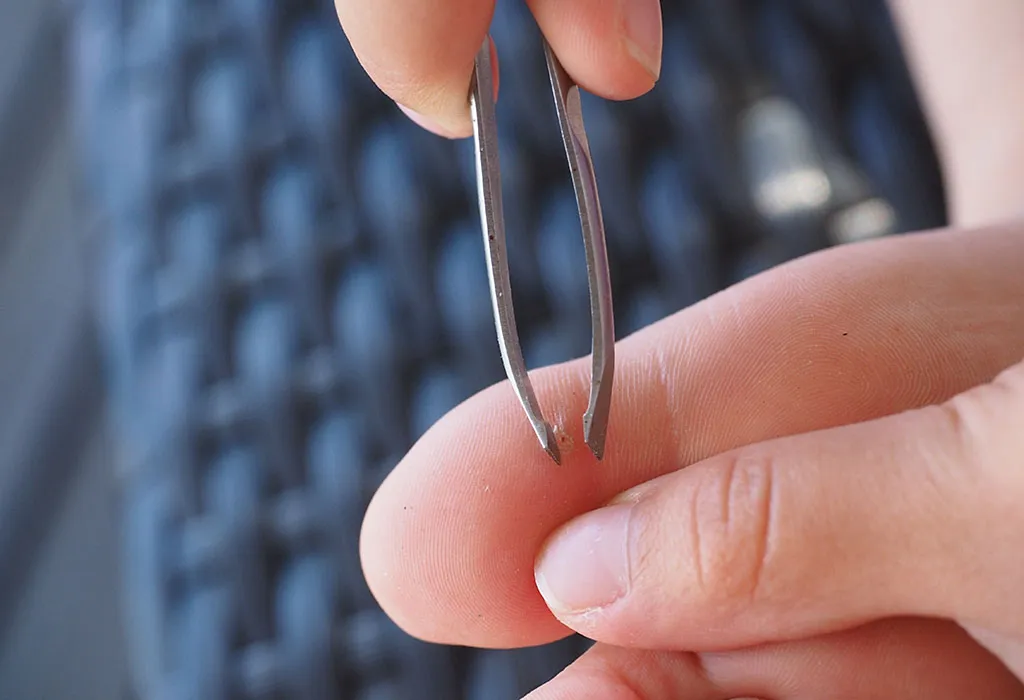
- Sterilize your tweezers and a sewing needle using rubbing alcohol
- Use the needle to gently lift the edge of the skin, exposing the tip of the splinter
- Grasp the splinter with tweezers and pull it out in a smooth, steady motion
Keep your child as still as possible throughout. Distraction methods like reading a book, watching a short video, or singing a song may help.
Step 5: Clean and Cover the Area After Removal
Once the splinter is out:
- Rinse the area again with warm water and soap
- Apply a small amount of antibiotic ointment
- Cover with a bandage, especially if the area is on the hand or foot
- Praise your child for being brave and let them know the worst is over
Keeping the area clean and dry over the next few days helps prevent infection.
When to Seek Medical Help
Although most splinters can be handled at home, some situations require urgent care:
- The splinter is too deep to remove without pain or bleeding
- The area becomes red, swollen, or starts to ooze
- Your child develops a fever or seems unusually uncomfortable
- The splinter is under the fingernail, in the eye area, or has broken off under the skin
- Your child hasn’t had a tetanus shot within the last five years
Prompt care can prevent complications like infection or retained splinter fragments.
Common Mistakes to Avoid
- Don’t rush the process—take time to calm your child before starting
- Avoid squeezing the skin around the splinter, which can push it in deeper
- Don’t dig into the skin if you can’t see the splinter clearly
- Never try to force removal while your child is kicking or crying—it increases the risk of injury
If symptoms get worse or don’t improve, visit your local urgent care provider for professional evaluation.
Hey Did You Know We Have an IV Therapy Spa Inside? Check out our drip menu!
calm child medicalchild splinter removalfirst aid splintershome care for kidsinfection prevention kidsminor injury in kidspainful splinter childparenting health tipspediatric first aidplay injury careremoving splinter tipssafe splinter toolssplinter in footsplinter in toddlertiny splinter in skintoddler injury helptoddler skin caretweezers and toddlersurgent care toddler