
If you’re nervous about needles, you might wonder whether getting an IV is more uncomfortable than a routine blood draw—especially if the needles are different in size. The short answer: IV needles are typically larger …
Is an IV needle bigger than a blood draw needle?
July 8, 2025
If you’re nervous about needles, you might wonder whether getting an IV is more uncomfortable than a routine blood draw—especially if the needles are different in size. The short answer: IV needles are typically larger and designed differently, but that doesn’t necessarily mean they’re more painful.
Here’s a breakdown of how IV and blood draw needles compare, and what to expect from each.
1. IV needles are slightly larger—but only temporarily
When you get an IV, the provider inserts a needle with a soft plastic catheter over it. Once the vein is accessed, the needle is removed, and only the small flexible tube (catheter) stays in your vein.
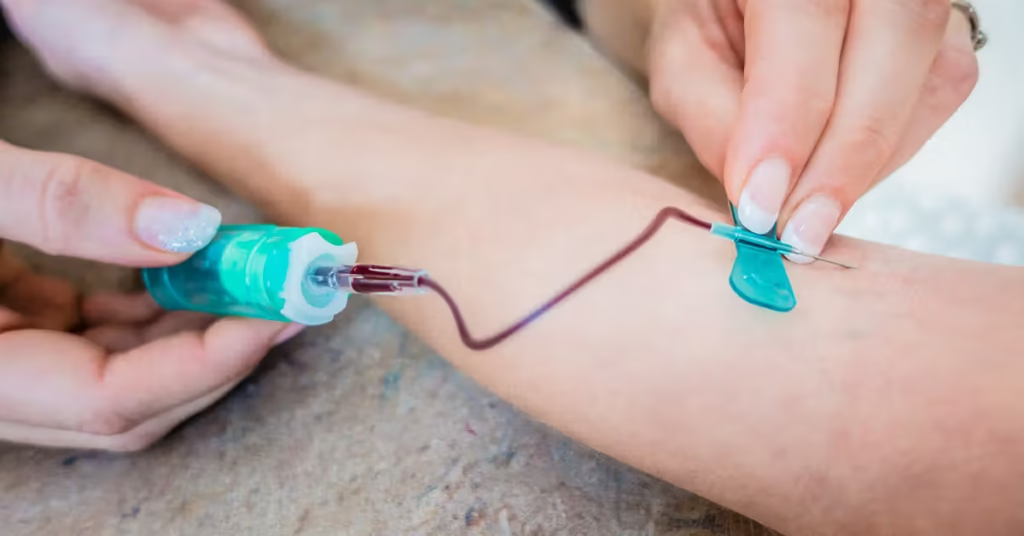
In contrast, a blood draw needle stays in place just long enough to collect the required blood samples, then it’s removed entirely.
2. Needle gauge determines thickness
Needles are sized by gauge—and the lower the gauge, the larger the needle.
Typical gauge sizes:
- Blood draws:
- Usually 21 to 23 gauge
- Thin enough for quick blood flow without causing trauma
- IV catheters:
- Typically 18 to 22 gauge, depending on what’s being infused
- An 18-gauge IV (often used for fluids, meds, or trauma) is wider than most blood draw needles
- 22-gauge IVs (used for smaller veins or less urgent needs) are similar to blood draw needles
While the IV insertion needle may be slightly wider, it’s only in your arm for a few seconds, and then the flexible catheter takes over.
3. Pain level isn’t just about size
Most people don’t notice a major difference in pain between the two, because:
- Both procedures involve a quick pinch or sting
- Experience of the provider matters more than needle size
- Location and depth of the vein can affect comfort
In many cases, IV placement and blood draws feel very similar, especially when done by a skilled provider.
4. Why IVs use larger needles
IVs often require a slightly larger size because they’re used to:
- Infuse fluids quickly
- Deliver medications or vitamins
- Keep a line open for emergency use
Larger gauge IVs allow for faster flow rates, which is why they’re chosen in hospital or urgent care settings where time and volume matter.
Final thought
Yes, IV needles are generally slightly larger than blood draw needles, but they’re only used briefly to insert a soft catheter. Both procedures are designed to be as comfortable as possible, and for most people, the difference in sensation is minimal.
If symptoms get worse or don’t improve, visit your local urgent care provider for professional evaluation.
Hey Did You Know We Have an IV Therapy Spa Inside? Check out our drip menu!
18 gauge iv21 gauge blood drawblood draw needle gaugeblood test needle sizedoes iv hurt more than blood drawgauge of iv needlesinfusion needle vs blood testinserting iv vs drawing bloodis iv needle biggeriv catheter sizeiv needle vs blood drawmedical needle comparisonneedle size comparisonneedle thickness chartpain iv vs blood drawurgent care iv infowhat size is an iv needle



















