Skin cancer is the most common form of cancer, and it can affect anyone—regardless of age, skin tone, or lifestyle. While many types are highly treatable when caught early, delayed detection can lead to more …
Skin Cancer Checks: What to Watch For
July 12, 2025
Skin cancer is the most common form of cancer, and it can affect anyone—regardless of age, skin tone, or lifestyle. While many types are highly treatable when caught early, delayed detection can lead to more serious outcomes. Regular skin checks are an important part of cancer prevention and early identification.
Knowing what to look for, when to see a provider, and how to monitor changes at home can help individuals take charge of their skin health. Whether performing self-exams or undergoing professional screenings, consistent attention is key.
Types of skin cancer
There are several main types of skin cancer, each with distinct features and varying levels of severity.
- Basal cell carcinoma is the most common and least aggressive. It typically appears as a pearly bump or patch and tends to grow slowly.
- Squamous cell carcinoma often presents as a red, scaly, or crusted area that may bleed or ulcerate. It has a higher risk of spreading if untreated.
- Melanoma is the most dangerous form. It can appear as a new mole or a change in an existing one. Though less common, melanoma can spread rapidly to other organs.
Each of these can develop on any part of the body but are most often found on areas frequently exposed to the sun, such as the face, arms, ears, and neck.
What to watch for during skin checks
Recognizing the signs of potential skin cancer starts with becoming familiar with your own skin. Changes may be subtle at first, but ongoing self-monitoring can help detect new or evolving areas early.
Key things to look for include:
- New growths or spots that appear suddenly
- Moles that change in size, shape, or color
- Asymmetry—where one half of a mole doesn’t match the other
- Irregular or poorly defined borders
- Uneven or multiple colors within one mole
- Spots larger than a pencil eraser
- Sores that don’t heal within a few weeks
- Growths that itch, bleed, or become painful
The ABCDE rule is often used to assess concerning moles: Asymmetry, Border irregularity, Color variation, Diameter over 6mm, and Evolution or change over time.
Risk factors for skin cancer
While anyone can develop skin cancer, some individuals are at higher risk due to genetic and environmental factors. Understanding your personal risk can guide the frequency and urgency of screenings.
Common risk factors include:
- History of frequent sunburns or tanning bed use
- Fair skin, light eyes, and blond or red hair
- A large number of moles or atypical moles
- Family history of skin cancer
- Older age
- Weakened immune system
- Living in sunny or high-altitude regions
Those with elevated risk may need annual professional exams, in addition to performing monthly self-checks at home.
The importance of professional skin exams
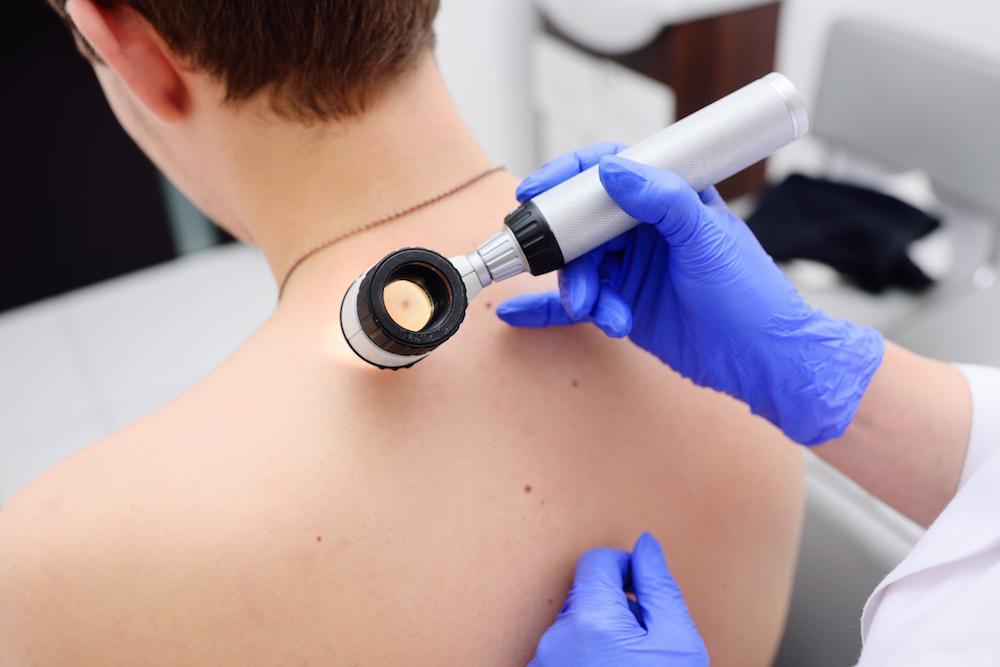
In addition to self-monitoring, full-body skin exams by a dermatologist or primary care provider are valuable for early detection. These exams involve a head-to-toe review using proper lighting and magnification to identify spots that may not be noticeable during personal checks.
Professional exams are especially important for areas that are difficult to see, such as the scalp, back, or behind the ears. Providers are trained to distinguish between harmless spots and suspicious lesions that may require a biopsy or further evaluation.
Annual exams are generally recommended for those at moderate to high risk, while lower-risk individuals may undergo exams every few years depending on their provider’s guidance.
What happens if something suspicious is found
If a mole or lesion appears abnormal, the next step is often a skin biopsy. This involves removing a small portion—or the entirety—of the spot to analyze under a microscope. The procedure is quick and typically done in-office under local anesthesia.
If skin cancer is confirmed, treatment depends on the type and stage. Most early-stage cancers can be removed completely with minor outpatient surgery. In more advanced cases, additional procedures or therapies may be needed.
Follow-up after diagnosis is important to monitor for recurrence and to check for new spots that may develop elsewhere on the skin.
Prevention and protection strategies
Although not all skin cancers are preventable, many are linked to UV exposure. Simple daily practices can significantly lower the risk of skin damage and cancer development.
Key protective habits include:
- Using broad-spectrum sunscreen with SPF 30 or higher every day
- Wearing hats, sunglasses, and long sleeves during sun exposure
- Seeking shade during peak sunlight hours
- Avoiding tanning beds entirely
- Performing monthly skin self-exams
These actions are especially critical for individuals with prior sunburns or a personal history of skin cancer. Early protection often leads to fewer complications later in life.
Takeaway
Regular skin cancer checks—both at home and with a provider—are essential to catching abnormalities early and improving treatment outcomes. By staying alert to new or changing spots and understanding personal risk factors, individuals can take proactive steps in protecting their skin and overall health.