
Strep throat is a common bacterial infection that affects the throat and tonsils, causing discomfort and sometimes serious complications if left untreated. It is caused by group A Streptococcus bacteria, which are highly contagious and …
Strep Throat: Symptoms and Treatment
June 5, 2025
Strep throat is a common bacterial infection that affects the throat and tonsils, causing discomfort and sometimes serious complications if left untreated. It is caused by group A Streptococcus bacteria, which are highly contagious and spread through respiratory droplets when an infected person coughs or sneezes. Understanding the symptoms and treatment options for strep throat is essential for quick recovery and preventing its spread to others.
Symptoms of Strep Throat
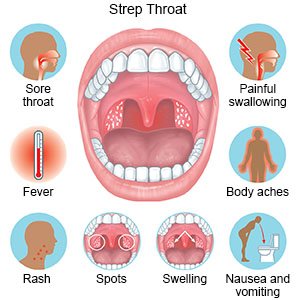
The symptoms of strep throat can appear quickly, usually within 2 to 5 days after exposure. Some of the most common signs include:
- Sore Throat: The hallmark symptom, often severe and sudden in onset.
- Painful Swallowing: Difficulty and pain when swallowing food or liquids.
- Red and Swollen Tonsils: Sometimes with white patches or streaks of pus.
- Fever: Usually 101°F (38.3°C) or higher.
- Swollen Lymph Nodes: Tender nodes in the neck area.
- Headache and Body Aches: General feelings of discomfort or malaise.
- Nausea or Vomiting: More common in children than adults.
- Loss of Appetite: Reduced desire to eat or drink due to throat pain.
It’s important to note that not all sore throats are caused by strep bacteria—viral infections can cause similar symptoms but do not require antibiotics. A proper diagnosis is essential to determine the right treatment.
How Is Strep Throat Diagnosed?
Doctors typically diagnose strep throat through a physical examination and a rapid strep test. The test involves swabbing the throat to detect the presence of group A Streptococcus bacteria. If the rapid test is negative but strep throat is still suspected, a throat culture may be done for more accurate results.
Treatment Options
Because strep throat is caused by bacteria, antibiotics are the primary treatment. Penicillin or amoxicillin are commonly prescribed and are effective in clearing the infection, reducing symptoms, and preventing complications. It is critical to complete the entire course of antibiotics, even if symptoms improve before finishing the medication.
Home Care and Symptom Relief
In addition to antibiotics, several home care practices can help alleviate symptoms and speed recovery:
- Rest: Giving the body time to heal is vital.
- Stay Hydrated: Drinking plenty of fluids keeps the throat moist and helps prevent dehydration.
- Gargle Salt Water: Warm salt water rinses can reduce throat pain and inflammation.
- Use a Humidifier: Adding moisture to the air can soothe a dry, sore throat.
- Over-the-Counter Pain Relievers: Medications like ibuprofen or acetaminophen can reduce fever and relieve pain.
When to See a Doctor
If you or your child experience a severe sore throat with fever, difficulty swallowing, or swollen glands lasting more than a couple of days, it’s important to seek medical attention. Untreated strep throat can lead to serious complications such as rheumatic fever, kidney inflammation, or abscess formation around the tonsils.
Preventing Strep Throat
Prevention focuses on good hygiene practices:
- Wash hands frequently with soap and water.
- Avoid close contact with infected individuals.
- Don’t share eating utensils, cups, or personal items.
- Cover your mouth and nose when coughing or sneezing.
Final Thoughts
Strep throat is a common but treatable condition. Early diagnosis and proper antibiotic treatment are key to a swift recovery and avoiding complications. If you or a loved one show symptoms of strep throat, don’t hesitate to reach out for professional care.
Call 305-344-CARE (2273) today to schedule an appointment or get expert advice. Quick action can make all the difference in your health and comfort!
beach medical helpbeachside medical clinicdehydration treatment Miamiemergency clinic Miami BeachER alternative Miamifast care South Floridafood poisoning clinicheat exhaustion Miami Beachjet lag recovery IVkid-friendly urgent careMiami Beach health tipsMiami Beach local doctorMiami nightlife recoveryquick STD testing Miamiquick X-rays MiamiSouth Beach flu seasonsports injury Miami Beachsunburn treatment Miamiurgent care for travelerswound care clinic



















