
IV (intravenous) therapy involves inserting a catheter into a vein to deliver fluids, medications, or nutrients directly into the bloodstream. While veins are found throughout the body, healthcare professionals rely on eight primary IV access …
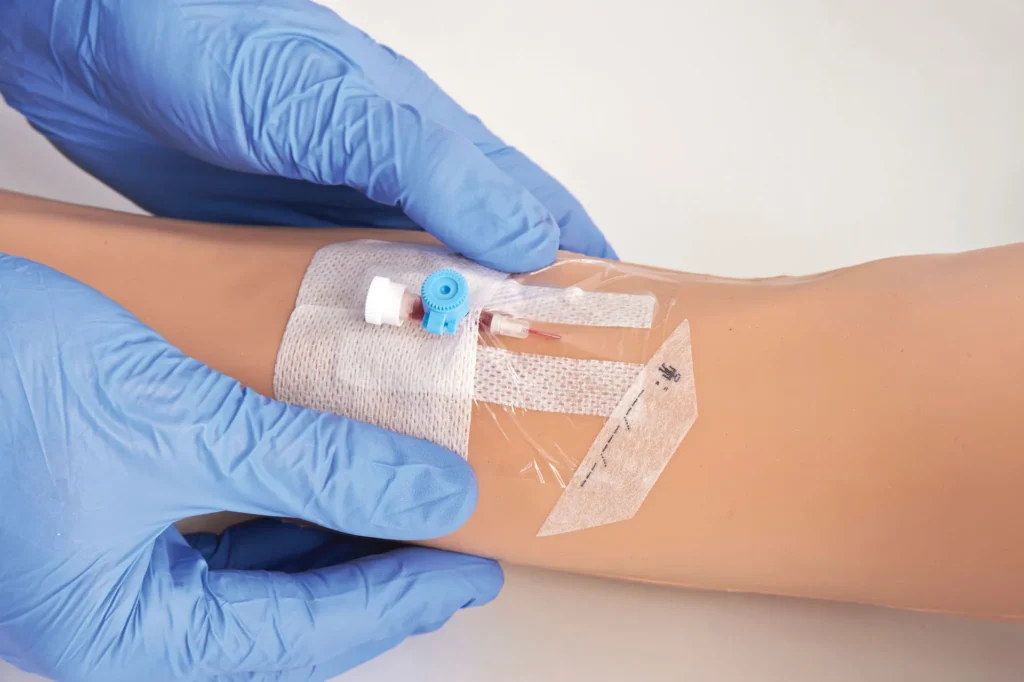
What are the 8 sites for IV injection?
July 8, 2025
IV (intravenous) therapy involves inserting a catheter into a vein to deliver fluids, medications, or nutrients directly into the bloodstream. While veins are found throughout the body, healthcare professionals rely on eight primary IV access sites that offer safe, reliable entry points with good blood flow.
Here are the most common IV injection sites and why they’re used:
1. Dorsal hand veins
These are the veins on the back of your hand—often visible and easy to access.
- Commonly used for: Hydration, short-term IV therapy
- Pros: Easy access, less discomfort for quick infusions
- Caution: Can be sensitive and prone to irritation if used long-term
2. Cephalic vein (forearm or wrist)
Runs along the thumb side of your forearm and up the arm.
- Commonly used for: General IV fluids, medications
- Pros: Straight vein path, less risk of dislodgement
- Caution: Can be deep in some individuals and harder to see
3. Basilic vein (inner forearm)
Located on the pinky side of the inner forearm.
- Commonly used for: Moderate-length IV therapy
- Pros: Larger vein, good flow
- Caution: Closer to major arteries and nerves—requires skilled insertion
4. Median cubital vein (antecubital fossa)
Located in the crease of the elbow, this vein is frequently used for blood draws and IV starts.
- Commonly used for: Blood collection, short-term medication delivery
- Pros: Large, easy to find
- Caution: Discomfort with elbow movement, not ideal for long infusions
5. External jugular vein (neck)
Found in the side of the neck, usually used in urgent or inpatient settings.
- Commonly used for: Emergency or difficult access situations
- Pros: Reliable when arm veins fail
- Caution: More invasive, requires patient cooperation and proper positioning
6. Scalp veins (infants only)
Used in newborns or very young infants when other sites aren’t suitable.
- Commonly used for: Neonatal and infant IV access
- Pros: Visible, superficial veins in babies
- Caution: Not used in adults
7. Foot veins (dorsal aspect of the foot)
Veins on the top of the foot, used when hand and arm access is not possible.
- Commonly used for: Patients with limited upper extremity veins
- Pros: Sometimes the only option
- Caution: Higher risk of infection, slower blood flow, less preferred
8. Femoral vein (groin area)
Found in the inner thigh near the groin, this is typically a last resort or emergency-access site.
- Commonly used for: Trauma, critical care, or when no other veins are usable
- Pros: Large, deep vein with strong flow
- Caution: Requires sterile technique and is not used for routine IV therapy due to infection risk
Final thought
IV injection sites are chosen based on vein accessibility, patient comfort, and treatment type. While the arms and hands are most common, skilled providers can access less common sites when needed for emergency or long-term care. Regardless of location, proper technique ensures safe and effective delivery of IV therapy.
If symptoms get worse or don’t improve, visit your local urgent care provider for professional evaluation.
Hey Did You Know We Have an IV Therapy Spa Inside? Check out our drip menu!
antecubital iv sitebasilic vein accesscephalic vein ivchoosing iv sitecommon iv access veinsdorsal hand veinexternal jugular veinfemoral vein ivfoot vein iv siteintravenous injection spotsiv injection sitesiv therapy locationssafe iv injection sitesscalp vein for infantsurgent care iv accessvein locations for dripwhere do you get an ivwhere to insert ivwhich veins are used for iv



















