Trapped gas is one of the most common—and uncomfortable—digestive issues. It happens when air builds up in your stomach or intestines and gets stuck, causing pressure, bloating, and sometimes sharp pain. While usually harmless, the …
What are the symptoms of trapped gas?
July 7, 2025
Trapped gas is one of the most common—and uncomfortable—digestive issues. It happens when air builds up in your stomach or intestines and gets stuck, causing pressure, bloating, and sometimes sharp pain. While usually harmless, the symptoms of trapped gas can feel alarming, even mimicking more serious conditions like heart attacks or appendicitis.
Understanding how gas behaves in the body can help you identify it quickly and relieve it safely.
Common symptoms of trapped gas
- Abdominal bloating
A swollen or tight-feeling belly is one of the most noticeable signs. Your abdomen may look distended and feel firm or full. - Sharp or cramping stomach pain
Gas can trigger sudden, stabbing pain—often described as moving or shifting across the abdomen. It may feel worse when bending, twisting, or lying flat. - Burping or belching
When gas is stuck in the upper digestive tract, frequent burping can occur as your body tries to release it through the esophagus. - Flatulence
Passing gas from the lower digestive tract helps relieve pressure. You may notice a sudden release of air after movement, massage, or position changes. - Feeling of pressure in the stomach or chest
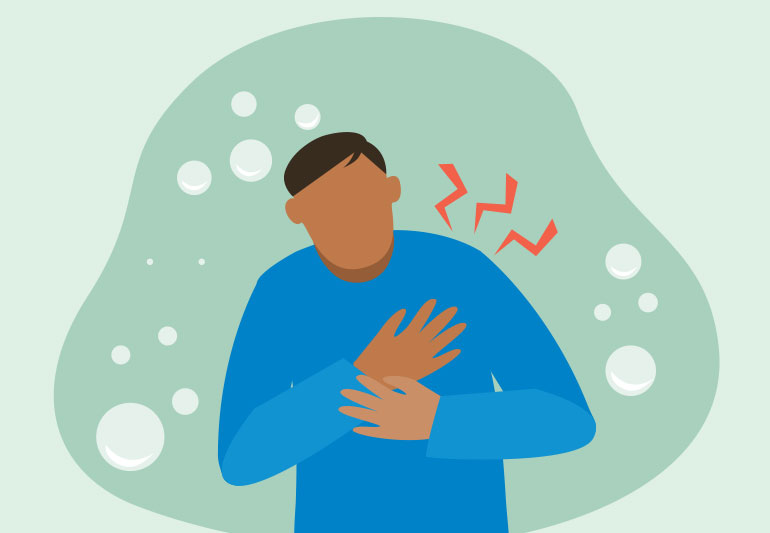
Trapped gas can create tightness in the upper abdomen or even the chest, especially after large meals or drinking carbonated beverages. - Gurgling or rumbling noises
Your stomach may make loud digestive sounds as gas tries to move through the intestines. - Temporary relief after passing gas or having a bowel movement
If your pain improves significantly after releasing gas or using the restroom, it’s a good sign that gas was the culprit.
Where you may feel trapped gas
- Upper abdomen: Can mimic acid reflux or even mild heart pain
- Lower abdomen: May feel like menstrual cramps or mild appendicitis
- Sides of your torso: Gas moving through the intestines can trigger sharp discomfort along the sides
When symptoms can seem serious
Gas pain can occasionally mimic more urgent health problems, which is why it’s important to pay attention to how long symptoms last, what makes them better or worse, and any other warning signs.
When to visit urgent care
Seek medical attention if you experience:
- Abdominal pain that lasts more than a few hours
- Severe bloating with no relief
- Fever, vomiting, or nausea
- Pain with blood in your stool
- A hard or distended abdomen
- Trouble breathing or chest tightness that doesn’t improve after burping
- No bowel movement or gas for 2+ days
These may be signs of a blockage, infection, or other condition requiring immediate evaluation.
Urgent care providers can quickly assess whether your symptoms are due to trapped gas or something more serious—and help you get relief fast.
How to relieve trapped gas at home
- Walk around or do gentle stretching
- Try abdominal massage or pressure point therapy
- Lie on your left side or use a knees-to-chest position
- Sip warm fluids like peppermint or ginger tea
- Take an over-the-counter gas reliever like simethicone
Final thought
Trapped gas can feel intense but is often temporary and treatable with home remedies and lifestyle changes. Recognizing the symptoms—like bloating, sharp pain, and pressure—can help you respond quickly. If your discomfort doesn’t improve or comes with red flag symptoms, urgent care is the safest place to get answers and relief.
If symptoms get worse or don’t improve, visit your local urgent care provider for professional evaluation.
Hey Did You Know We Have an IV Therapy Spa Inside? Check out our drip menu!