
When treating a minor burn at home, using the right topical cream can make a big difference in healing time, pain relief, and infection prevention. But with so many options—antibiotic ointments, aloe gels, hydrogels, and …
What Kind of Creams Are Best for Minor Burns?
July 2, 2025
When treating a minor burn at home, using the right topical cream can make a big difference in healing time, pain relief, and infection prevention. But with so many options—antibiotic ointments, aloe gels, hydrogels, and more—it can be hard to know which is best.
Here’s a helpful breakdown of the best types of creams for minor (first-degree) burns and how to use them correctly.
Step-by-Step: Choosing the Right Burn Cream
- Aloe Vera Gel
A natural go-to for good reason. Aloe vera provides cooling relief, reduces inflammation, and supports the skin’s healing process. Look for 100% pure aloe vera gel without added colors or alcohol. - Hydrogel Burn Creams
These water-based creams help cool the skin and maintain moisture, which is essential for healing. Hydrogels are especially good for superficial burns and sunburns, helping reduce pain and scarring. - Antibiotic Ointments (Use Only if the Skin Is Broken)
If the burn has blistered and the skin is open, an over-the-counter antibiotic cream like bacitracin or triple antibiotic ointment can help prevent infection. Apply sparingly and always to clean skin. - Silver Sulfadiazine (Prescription Only)
This is used for more serious burns and is available by prescription. It should not be used on minor household burns unless recommended by a doctor. - Lidocaine-Infused Burn Creams (Pain Relief)
Some creams contain lidocaine, a mild anesthetic, which can help reduce discomfort. These are best for small, shallow burns. Avoid overuse and never apply to broken skin.
How to Apply Burn Cream Safely
- Clean the Area First
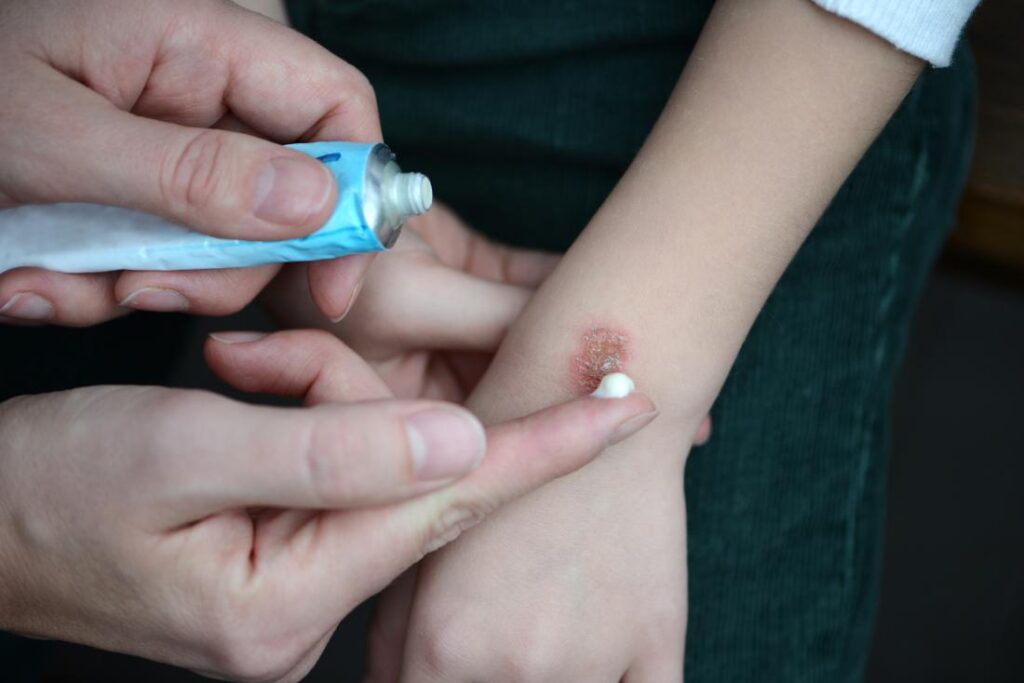
Rinse the burn gently with cool water and pat dry with a clean towel before applying any product. - Apply a Thin Layer
A small amount goes a long way. Avoid heavy application that traps heat or moisture. - Cover if Needed
For burns in friction-prone areas, cover with a sterile, non-stick bandage after applying the cream. - Reapply as Directed
Most burn creams should be applied 1–2 times per day, or as noted on the label.
When to Seek Urgent Care
Even with the best creams, some burns need medical attention. Go to urgent care if:
- The burn is larger than 3 inches or located on the face, hands, feet, or genitals
- Blisters burst and the area becomes red, swollen, or weepy
- There are signs of infection (pus, odor, increasing pain)
- Pain continues to worsen after the first day
- You haven’t had a tetanus shot in the last 5 years
Helpful Tips & Common Myths
- ✅ Tip: Store aloe gel in the fridge – This gives extra soothing relief when applied cold
- ❌ Myth: Thick layers of cream speed healing – Over-applying can delay recovery by trapping heat
- ✅ Tip: Always check the expiration date on burn creams – Expired products lose effectiveness
- ❌ Myth: Any moisturizer will do – Some lotions contain fragrances or alcohol that can irritate burned skin
If symptoms get worse or don’t improve, visit your local urgent care provider for professional evaluation.
Hey Did You Know We Have an IV Therapy Spa Inside? Check out our drip menu!



















