
That dark purple bruise on your leg or arm might look worse than it feels. But what exactly does it mean? Bruises—also called contusions—happen when small blood vessels under the skin break and leak blood …
What That Purple Bruise Means (and How to Speed Healing)
July 3, 2025
That dark purple bruise on your leg or arm might look worse than it feels. But what exactly does it mean? Bruises—also called contusions—happen when small blood vessels under the skin break and leak blood into the surrounding tissues. The result: discoloration, tenderness, and swelling.
Most bruises aren’t serious and heal on their own. Still, knowing what that purple color tells you—and how to help it fade faster—can ease discomfort and get you back to normal more quickly.
Why Do Bruises Turn Purple?
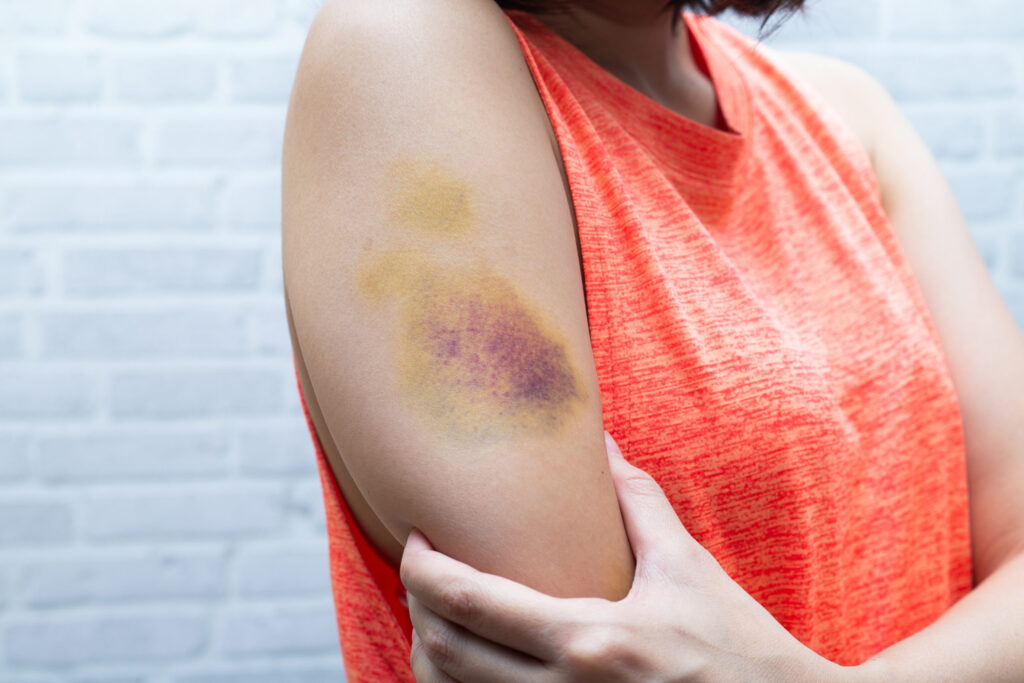
Right after an injury, a bruise may look red or pink. Within a day or two, it turns dark purple or blue. This color change happens as the pooled blood under the skin starts to break down.
The full bruise color cycle can look like this:
- Red or pink – right after impact
- Purple or blue – within 24–48 hours
- Green or yellow – after a few days
- Brown or faded – as it finishes healing
A purple bruise means the injury is still relatively fresh, but healing has begun.
How to Speed Up Bruise Healing
1. Apply Ice Early On
Cold constricts blood vessels, limiting the size of the bruise and reducing swelling.
- Wrap an ice pack or cold cloth in a towel
- Apply for 15–20 minutes at a time, several times a day for the first 48 hours
- Never place ice directly on the skin
2. Elevate the Area
If possible, keep the bruised area elevated to reduce blood flow and limit swelling.
- Use a pillow to raise your leg or arm
- Try to keep it elevated for 20–30 minutes, a few times a day
3. Rest and Protect the Area
Avoid activities that could aggravate the injury or delay healing.
- Use padding if necessary to protect from bumps
- Skip workouts that involve the injured area for a few days
4. Switch to Warm Compresses After 48 Hours
Once swelling goes down, warmth can help improve blood flow and clear away the pooled blood.
- Use a warm (not hot) towel
- Apply for 15 minutes, 2–3 times a day
5. Consider Arnica or Vitamin K Cream
Some people find over-the-counter arnica gels or creams with vitamin K helpful in reducing bruise appearance.
When to See a Medical Provider
While most bruises are harmless, get checked out if:
- The bruise is extremely painful or growing
- It appeared without injury
- You have multiple unexplained bruises
- The area becomes hard, swollen, or warm
- There’s numbness or tingling near the bruise
- You bruise very easily and often
These signs may point to a more serious injury or a bleeding/clotting disorder.
Tips to Prevent Future Bruising
- Wear protective gear during sports or outdoor activities
- Add lighting and remove tripping hazards at home
- Be cautious with medications or supplements that affect blood clotting (e.g., aspirin, fish oil)
- Eat foods rich in vitamin C and K, which support healthy blood vessels
Bruises are part of the body’s natural response to injury. With the right home care, that purple mark will fade—and you’ll feel better in no time.
If symptoms get worse or don’t improve, visit your local urgent care provider for professional evaluation.
Hey Did You Know We Have an IV Therapy Spa Inside? Check out our drip menu!



















